


Reduced Land Use
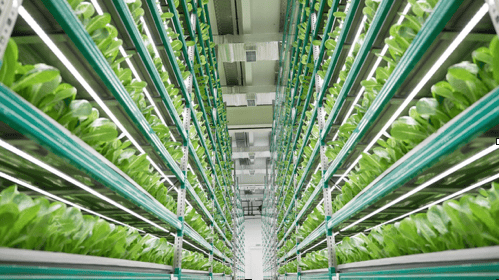
Vertical farming does not depend on land to grow crops and takes up less space due to stacking crops in vertical rows. Countries with less available land can then employ the technique to develop their agricultural sectors.
Increased Sustainability
Within the vertical farming industry, hydroponic farming provides a way for farmers to use far less water to grow crops when compared to traditional agriculture. Indoor environments also prevent issues like water evaporation and runoff, making vertical farming’s water usage more efficient. Since vertical farming isn’t dependent on land to grow crops, the practice doesn’t pollute the land or erode soil either.
Year-Round Production
Growing crops in carefully regulated indoor environments means societies don’t need to have fertile soil or favourable weather conditions to grow what they want. Crops can be grown year-round on trays stacked to the ceilings of large facilities.
Fresher Produce
Vertical farming enables companies to grow produce in warehouses and greenhouses close to different populations, reducing logistical headaches and pollution emitted during transportation. Traveling a shorter distance also means produce will come out fresher and raise the quality of food that people have access to, especially in food deserts and other underserved areas.
Safer Growing Environments
Pathogens like E. coli pose a threat to tradional agriculture, but the highly regulated environments of vertical farm facilities can help prevent such outbreaks. Indoor facilities also naturally keep out other pests, removing the need for pesticides and allowing farmers to cultivate crops without applying harmful chemicals.
Improved Efficiency
Vertical farming can easily integrate agricultural robots to automate workflows, such as monitoring indoor conditions, tracking the status of crops and performing other basic tasks. Farmers and workers can then focus on more complex problems, reducing the costs of manual labor and raising the productivity of workers.
Climate Change Resilience
In the face of a climate that is warming and becoming unpredictable, moving agriculture indoors can be a game-changing decision for populations in extreme environments. For example, Saudi Arabia and the United Arab Emirates have invested in vertical farming facilities to defy their hot and arid climates. These projects may prove to be life-saving as these countries’ climates become increasingly unlivable for both humans and crops.